|
|
|
Invited SpeakersInvited Speakers to EcatalytiX-II are as following:
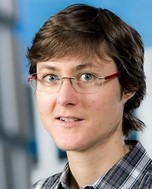
Katarina, established at the Leiden University as an assistant professor, is specialized in computational and theoretical methods aiming to rationalize the atomic scale processes occurring at metal interfaces. She uses a vast array of methods ranging from electronic structure computation to molecular dynamics and mean-field modelling, to grasp the full complexity of a metallic interface under operando conditions. In the frame of EcatalytiX II, her contribution will provide a crucial view on what theoreticians expect from experimental operando observations of electrocatalytic systems.
Jakub, established at the European Synchrotron Radiation Facility as the responsible for the ID31 beamline has been spearheading, through the continuous development of his beamline, the wide-spread use of tools to follow the morphological and chemical structure of electrocatalysts by crystallography, tomography and wide/small angle X-ray diffraction. All of these techniques were applied under operando conditions on samples ranging from model systems to highly complex, 3D, nanostructures. His energetic involvement in the operando electrocatalysiscommunity, helped push instrumental boundaries always further in order to address scientific challenges.
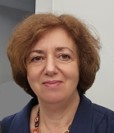
Elena, is a full professor at the University of Strasbourg and editor-in-chief of Electrochimica Acta, the official journal of the International Society of Electrochemistry. Throughout her career she has been exploring electrochemical interfaces using a variety of electrochemical as well as in situ and operando spectroscopic methods, including X-ray photoelectron and X-ray absorption spectroscopy, infrared spectroscopy and Raman spectroscopy, to chase reactive intermediates and thus refine reaction mechanisms. Her expertise provided her with a broad view of operando electrocatalysis, from selecting the most suitable methods for specific questions to understanding the field’s key dos and don’ts.
Vasiliki, established at the ‘Ecole Polytechnique Fédérale de Lausanne’ as an associate professor, is tackling what is arguably one of most challenging operando methods – transmission electron microscopy – to directly ‘look’ at the electrode/electrolyte interface, both during its formation (nucleation, growth, phase transformation) and use (surface reconstruction, degradation mechanism). She is therefore bringing to EcatalytiX II pivotal insights on the challenges and perspectives on this operando technique that is often debated and always looked at with great attention and hopes.
Janis, established at the Fritz-Haber-Institut of the Max Planck Society as the group leader of his namesake group, delves in operando hard X-ray absorption spectroscopy methods, exploring both application and developments of these powerful methods for revealing the working structures of electrocatalysts. He pushes the technical limits of the XAS-based methods in all directions, either away from synchrotron radiation by developing lab-scale operando setups or toward higher time resolution and precision in data analysis by using machine learning as a mean to improve and expand data analysis processes.
|